When we started rebuilding our website, choosing the technology was the easy part. The harder question was how to explain what our company had become.
We still provide managed IT and support, but that is only part of our work. We also help businesses with security, compliance, technology planning, process automation, responsible AI, websites, custom software, and DevOps. The old name and website no longer told that story very well.
This is an internal Diverse Technology project. We are identifying it that way rather than pretending we were our own client.
Why We Rebuilt It
MAD Technical Solutions had grown well beyond the kind of company its name suggested. Describing every service in one long list was not the answer, though. That would have traded one problem for another and left visitors to work out how everything fit together.
We wanted someone arriving at the site to understand a few things quickly:
- We can keep their everyday technology working
- We can help protect the business and support its compliance obligations
- We can improve how the business uses technology, information, and automation
The site also needed to sound like us. We wanted it to be knowledgeable without being stiff, technically credible without being impenetrable, and direct without using fear to sell security services.
Finding the Story
We organized the company around three straightforward ideas: Operate, Protect, and Improve.
That gave us a way to introduce the business without reducing everything to a product menu. Managed IT and support help clients operate. Security and compliance help protect them. Consulting, automation, AI, web services, and custom development help them improve.
The categories are not rigid boundaries. Real projects routinely cross between them. They simply give visitors a useful place to begin.
From there, we built the homepage around a conversation we actually have with prospective clients. What is getting in the way? Where is the risk? What could work better? How would we approach it? What have we done before?
The result is a path from the business problem to the relevant service, rather than a wall of technical capabilities.
Inclusion Was Not an Add-On
The word “Diverse” is intentional. We wanted inclusion to be part of the company’s public identity because it is part of our values and how we want to work with people.
That meant doing more than adding a diversity paragraph to an About page. It affected the language we used, the people represented in our photography, the accessibility and readability decisions we made, and the tone of the entire site.
We made a conscious effort to:
- Use respectful language that does not talk down to nontechnical readers
- Show a wider range of people, identities, and professional roles
- Pay attention to contrast, responsive behavior, and light and dark presentation modes
- Discuss security calmly instead of frightening people into buying something
- Remember that technology affects employees and customers, not just devices and budgets
We did not want the message to feel bolted on or performative. For us, respecting the people who use technology is part of delivering good technology.
Building Something We Could Maintain
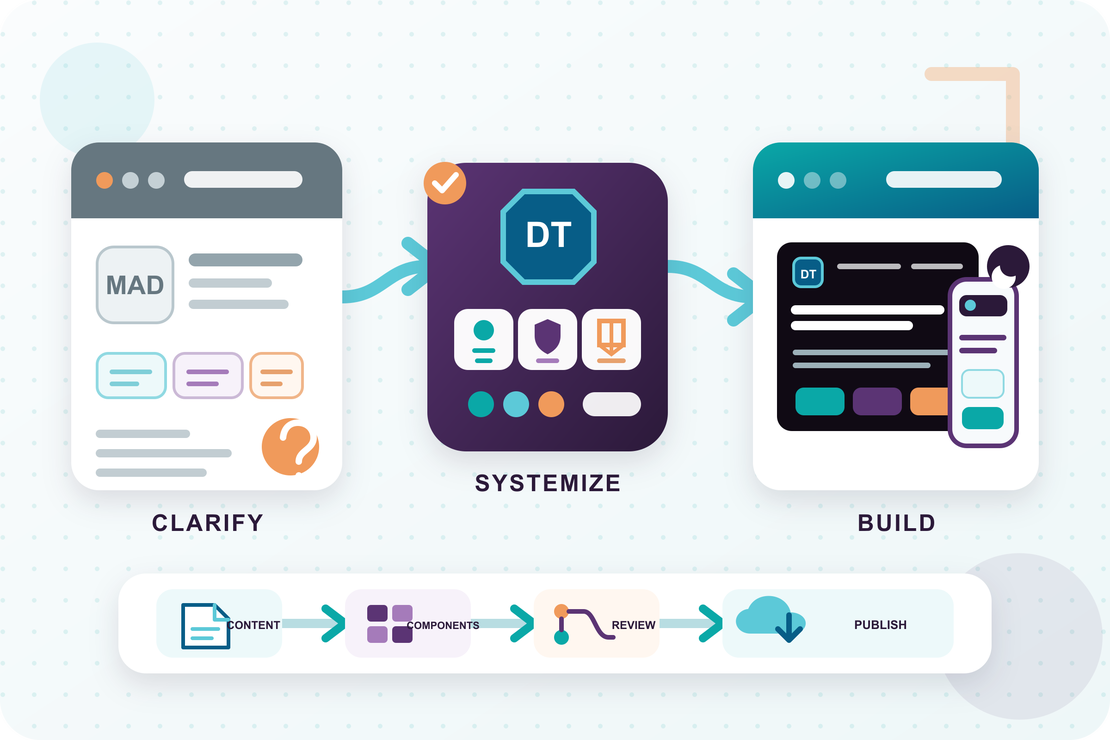
We used Hugo because the website did not need a database or a large content-management platform behind it. A static site gives us a smaller operational footprint while still letting us manage pages through Markdown and structured front matter.
Bigspring provided a useful starting point, but we did not want to edit the original theme every time the site needed something specific. We created a separate DTWebsite theme for our templates, components, and styles. That keeps our work distinct from the upstream theme and makes future updates less painful.
Along the way, we created reusable components for the service pillars, problem cards, alternating content sections, process explanations, testimonials, case studies, and calls to action. We also built a section-tracking system so long pages can alternate backgrounds without every page author manually keeping count.
The site lives in version control and uses an automated build and publishing workflow. Changes can be reviewed before they reach the live site, and the same build process is used each time.
Results So Far
The site is new, so we do not yet have a meaningful body of traffic or conversion data, and we are not going to invent one.
What we do have is a website that:
- Describes the company we are today rather than the narrower company we used to be
- Gives consulting and process automation the prominence they deserve
- Makes our inclusive values visible throughout the experience
- Works across desktop and mobile layouts in both light and dark modes
- Can grow through reusable sections instead of one-off page designs
- Gives us a practical place to publish real client work and useful guidance
- Can be changed, reviewed, built, and published through a repeatable workflow
Just as importantly, we can maintain it ourselves without turning every copy change into a development project.
What Comes Next
A website is never really finished, and this one should not be. We will use actual performance, accessibility, search, and engagement data to decide what needs improvement.
As the site begins receiving meaningful traffic, we will be able to measure how visitors move through the service pages, which topics answer useful questions, and which paths lead to real conversations. Those results will eventually belong in this case study too.
For now, the honest outcome is a clearer expression of who Diverse Technology is, what we do, and how we want people to experience working with us.