A global organization engaged Diverse Technology to migrate its aging on-premises servers and infrastructure to AWS. The project became an opportunity to improve not only where its systems operated, but how infrastructure and application changes were developed, tested, reviewed, and delivered.
The client’s identity and certain identifying details have been withheld to protect confidentiality.
Client
A global organization operating internally developed applications supported by its own software team and a collection of aging, manually maintained on-premises infrastructure.
Challenge
The organization’s local infrastructure had evolved over many years and was approaching the end of its practical service life. Systems were maintained largely through manual processes, and the environment required comprehensive documentation before workloads could be safely redesigned and migrated.
Infrastructure changes were difficult to reproduce consistently across environments. At the same time, the internal software team needed more standardized procedures for building, versioning, testing, scanning, and publishing its applications.
The migration therefore needed to address two related concerns:
- Moving production systems from on-premises infrastructure to AWS
- Establishing a sustainable way to manage future infrastructure and application changes
Approach
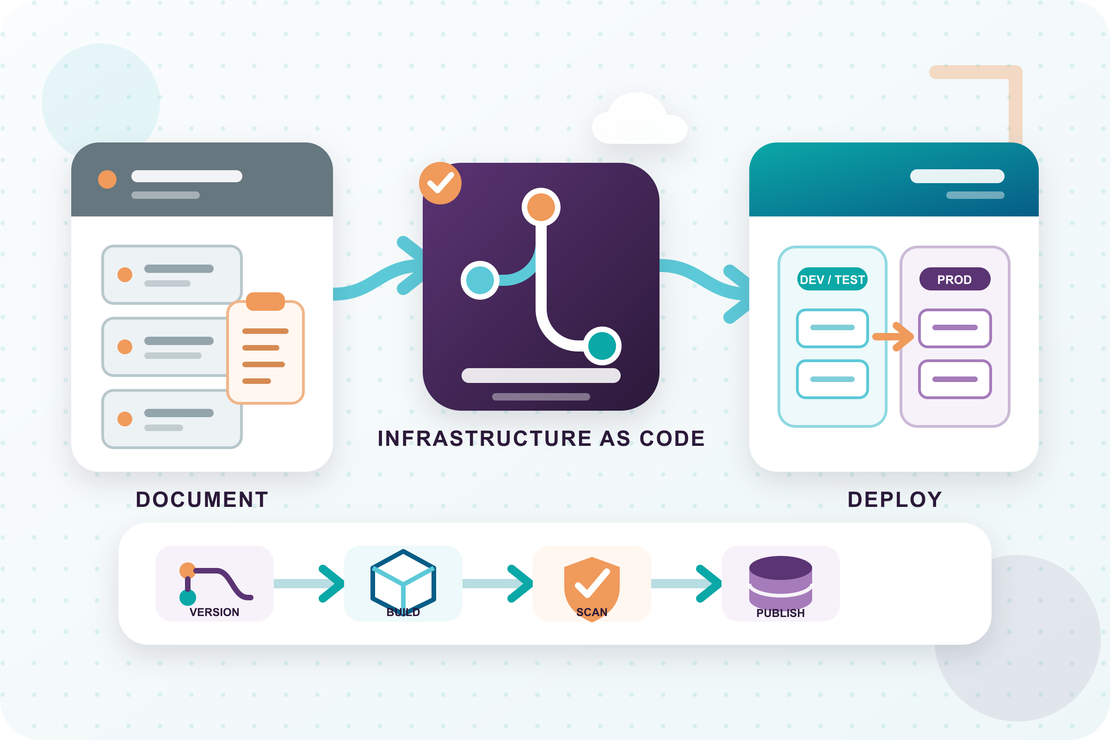
Diverse Technology began by documenting the existing environment, its dependencies, and the systems supporting the organization’s applications.
Rather than reproduce the same manually maintained infrastructure in the cloud, we designed a version-controlled infrastructure-as-code model. This allowed proposed changes to move through development, testing, and production using a controlled branch-based workflow.
We worked alongside the organization’s internal software team so its application-delivery practices could mature with the new infrastructure.
Infrastructure Modernization
Diverse Technology created Terraform configurations for infrastructure hosted across AWS and Backblaze, with Terraform Cloud coordinating infrastructure planning and deployment.
The CI/CD workflow supported three stages:
- Feature branches allowed infrastructure modifications to be developed, reviewed, and tested before affecting shared environments.
- Development and testing deployed a complete non-production environment in AWS for validating infrastructure and application changes.
- Production promoted approved changes to the organization’s live infrastructure and applications.
This replaced one-off manual configuration with infrastructure definitions that could be reviewed, versioned, and applied consistently.
Software Delivery Modernization
To complement the infrastructure work, Diverse Technology helped the internal software team establish standard operating procedures for its development and release process.
The resulting DevOps workflow included:
- Defined procedures for developing and reviewing changes
- Automated semantic versioning
- Automated container-image builds and testing
- Publication of approved images to designated repositories
- Integrated security scanning
- Improved visibility into build and release status
- A repeatable path for promoting software through development and production
These practices gave the internal team a clearer and more consistent method for delivering its own applications.
Results
The engagement:
- Migrated core systems from aging on-premises infrastructure to AWS
- Created comprehensive documentation of the existing environment and its dependencies
- Established version-controlled infrastructure across AWS and Backblaze, and other cloud services
- Made infrastructure changes reviewable and repeatable through Terraform
- Created a complete cloud-based development and testing environment
- Introduced a controlled path for promoting infrastructure changes into production
- Standardized the internal software team’s development and release procedures
- Automated application versioning, container testing, publishing, and security scanning
- Improved visibility into both infrastructure and software delivery
The project changed more than the location of the organization’s workloads. It established a maintainable operating model in which infrastructure and application changes could be developed deliberately, validated before production, and delivered through consistent automation.